Problem
What was breaking
A visual surface with recurring updates degrades quickly when media handling has no clear and separate operating system.
Real work
The question here was not how to make a page look nicer. The question was how to make a gallery publishable over time without falling back into manual workarounds.
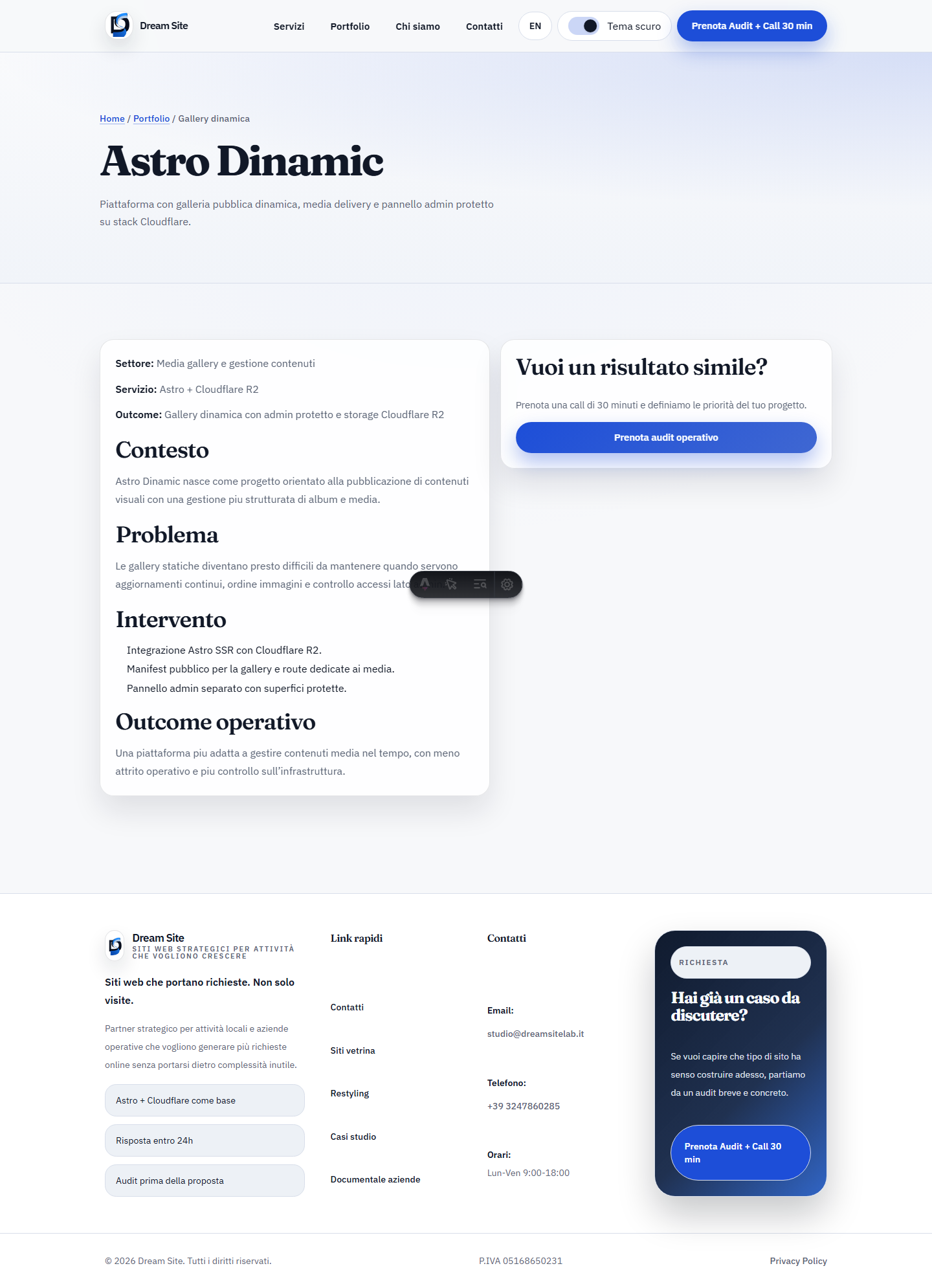
A piece of work where the main leverage was not the look of the site, but the system holding media publishing, ordering, and continuity together.
It shows that we can design surfaces where public proof and internal operations must coexist without collapsing into each other.
Problem
A visual surface with recurring updates degrades quickly when media handling has no clear and separate operating system.
Intervention
We treated the gallery as a content system: public manifest, protected surfaces, media organization, and a more resilient publishing flow.
Outcome
The result is not only a public gallery. It is a base that can hold continuity, order, and growth without turning every update into brittle maintenance.
Fit
It matters when a website has to keep living content, internal order, and a public-facing surface aligned at the same time.
Reading notes
The leverage came from giving structure to continuity: publish, reorder, and surface content without losing control.
Because it shows the ability to design what happens behind the public layer, not just on top of it.
What remains is a stronger base for publishing and growing media content over time.
More work
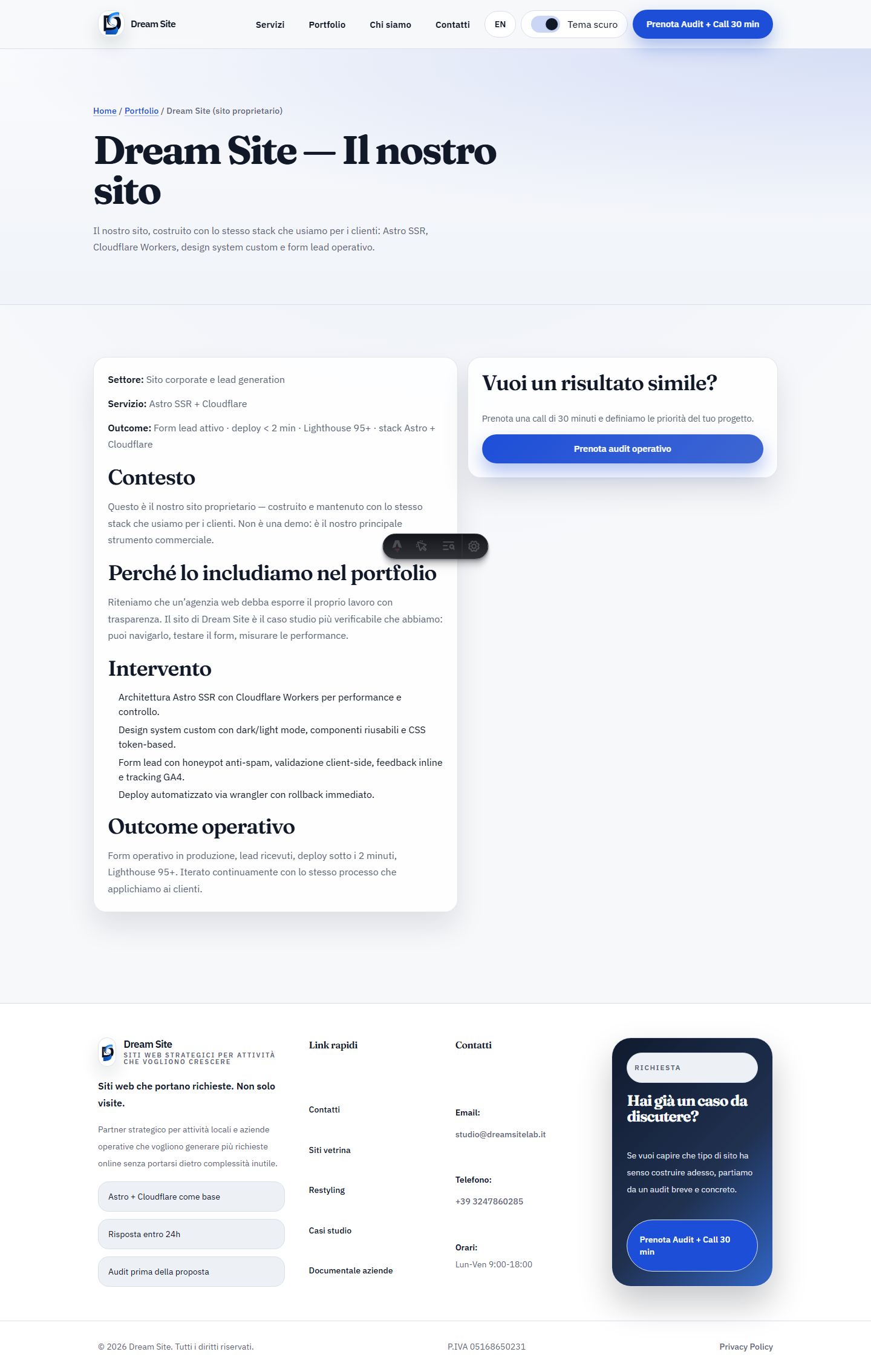
An owned surface used to test positioning, intake, and operating control before selling them to anyone else.
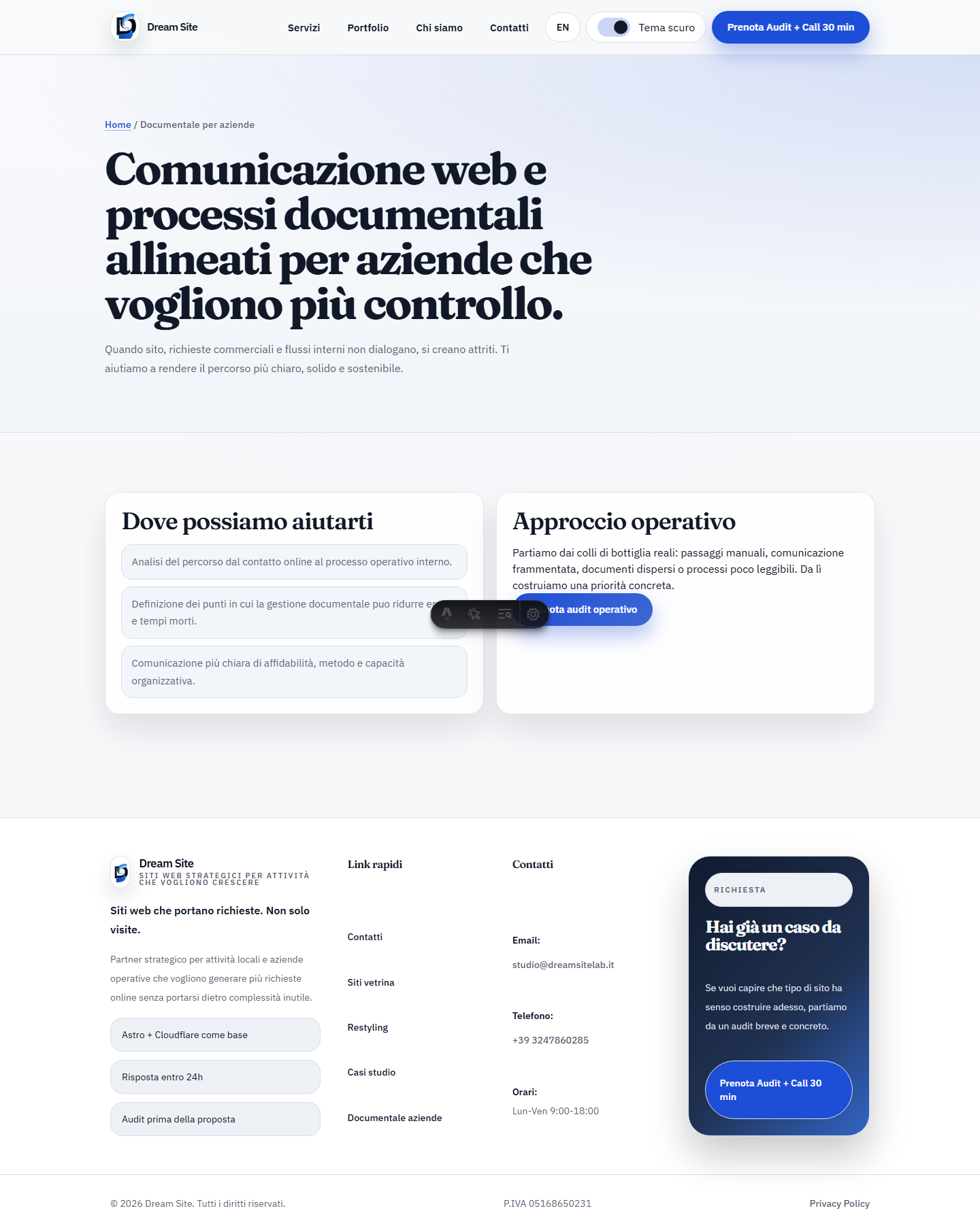
A real proof that when the bottleneck is not the page itself, we do not force a redesign as the default answer.
A real video-system proof: the same website logic produces loops, reels, and proof cards for campaigns and follow-up.